I created this site out of a sense of injustice and anger. Injustice at what had been done and the scale and the deliberateness of it all. And anger at those who are actively downplaying what was done or even outright denying it.
I devised the layout and structure of the site, starting with what happened, who the perpetrators were, who the victims were, and the final reckoning for the perpetrators. Some of the key perpetrators escaped justice altogether, and that is covered too. The final section is devoted to the deniers: those who lie about what happened and those who diminish what happened by drawing false parallels with what is happening in Gaza, for example.
Within those broad sections I then defined further topics arranged in logical sequence. And then a further layer below that. I don’t think there is a single aspect of the entire Holocaust catastrophe that is not covered. I then used Claude AI to write the bulk of the material, having given it numerous examples of my writing style to emulate, establishing the writing guidelines and making a rule that nothing on this site should be speculation. I then reviewed and revised every page. I stipulated that the following sources should be used:
- United States Holocaust Memorial Museum (USHMM): encyclopedia.ushmm.org, for educational and community content
- Yad Vashem: including the Central Database of Shoah Victims’ Names at yvng.yadvashem.org, plus their educational resources
- The Avalon Project at Yale: avalon.law.yale.edu, the heavy-lifter for documentary and evidential content (Einsatzgruppen reports, Nuremberg material, etc.)
- USC Shoah Foundation: sfi.usc.edu, for survivor and witness testimony
- The Nizkor Project: for denial rebuttals
- Hansard: for the British dimension
and to a lesser extent: - The Internet Archive: archive.org, for digitised wartime publications and contemporaneous journalism
- Contemporary newspapers now in the public domain: The Times 1945 archive, Manchester Guardian, American liberation reporting
My aim was not to produce a scholarly dissertation, full of citations and allowing for academic differences of opinions, but the general and accepted view supported by the sources listed on each page. I just cut through the waffle and state what happened in plain terms. I am confident that everything written in these pages can be checked and verified.
What I am particularly pleased about are the three chatbots I created. They each have complete knowledge of everything on this site, but they have individual backstories and an almost ‘personal’ way of presenting the material. I think this is a unique and powerful way of presenting Holocaust history. You can select whichever guide you would feel comfortable interacting with, and with close to 600 pages I am sure you will find them extremely helpful. They are AI generated, but I am real.
Mark
Meet Your Guides
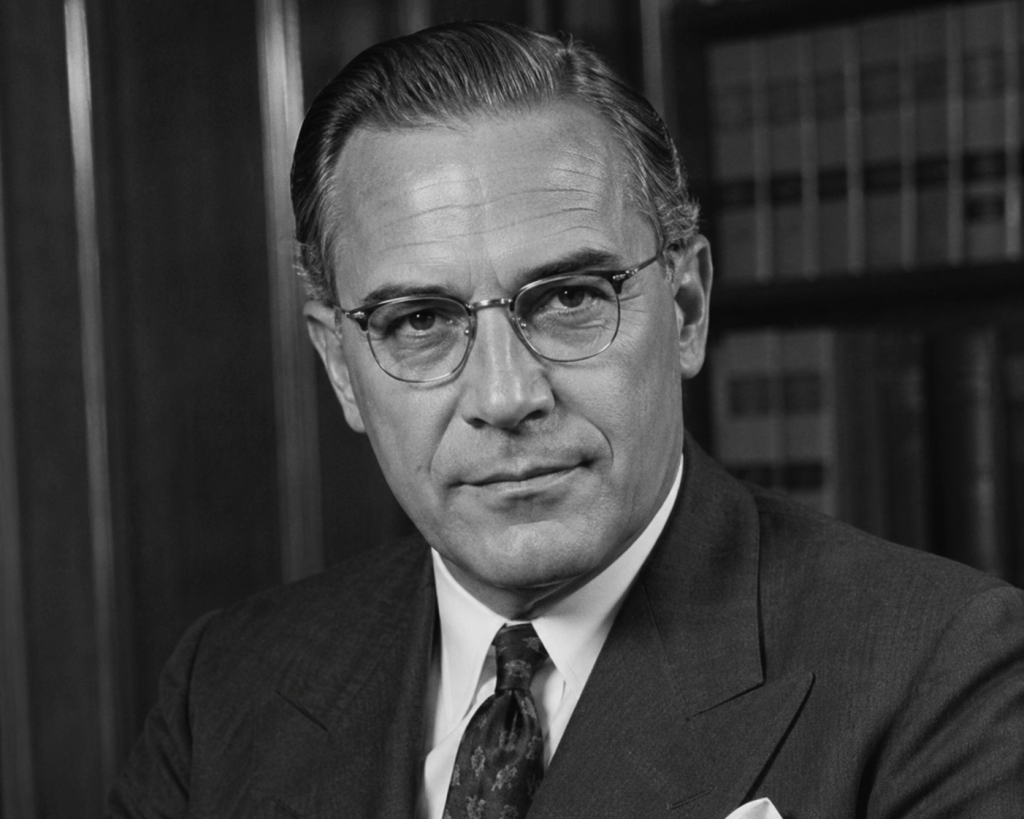
Leonard Mortimer was a Clerk to the British Prosecution at the Nuremberg Trials, working under Sir Hartley Shawcross, the Chief British Prosecutor. He read German, had been an interrogator on the Western Front in the First World War, and in his Nuremberg role handled the documentary evidence on which the British case was built.
Mortimer, as he is known to friends and colleagues, was born in 1893, educated at Cambridge University, and following the Nuremberg Trials opened his own legal Chambers in Lincoln’s Inn, London.

Yossel Wajntraub was born in 1914, in Żywiec in southern Poland near the Silesian border.
He and his young family were transported to Auschwitz in March 1943, where his wife and baby were immediately murdered. His trade as a carpenter made him useful to the Nazis and helped him miraculously to survive.
After passing through refugee camps, he finally settled in England, married and started a family again. He began giving talks in schools, and then clubs and societies, in the 1980s.

Hannah Day is a history teacher in her late twenties working at Sidcot School in Somerset, England.
She has been interested in studying the Holocaust ever since her own school days when she found the full horror of what happened hard to comprehend. As a Quaker, her religious beliefs and upbringing instilled in her the importance of peace, and of respect. Everything about the Nazis represented the opposite.
Hannah is academically very gifted and graduated from the University of Oxford with a BA (Hons) History, First Class.